
Introducing AI Product Planner: Structure your ideas for AI
Unified project planning, AI-guided specifications, readiness scoring, and dependency management for building with clarity.

You have ideas. Probably too many of them.
They live across docs, notes, Slack threads, and half-finished prompts. Turning those ideas into something your AI coding tool can build beyond a fragile prototype is where most builders get stuck.
Code is not the bottleneck anymore. Planning is.
Today, we are introducing BrainGrid AI Product Planner, a new way to bring structure to product thinking before a single line of code is written.
#What's New
AI Product Planner gives you a clear plan for what you are building and what is actually ready to build.
Everything lives in one place. No scattered notes. No guessing what comes next.
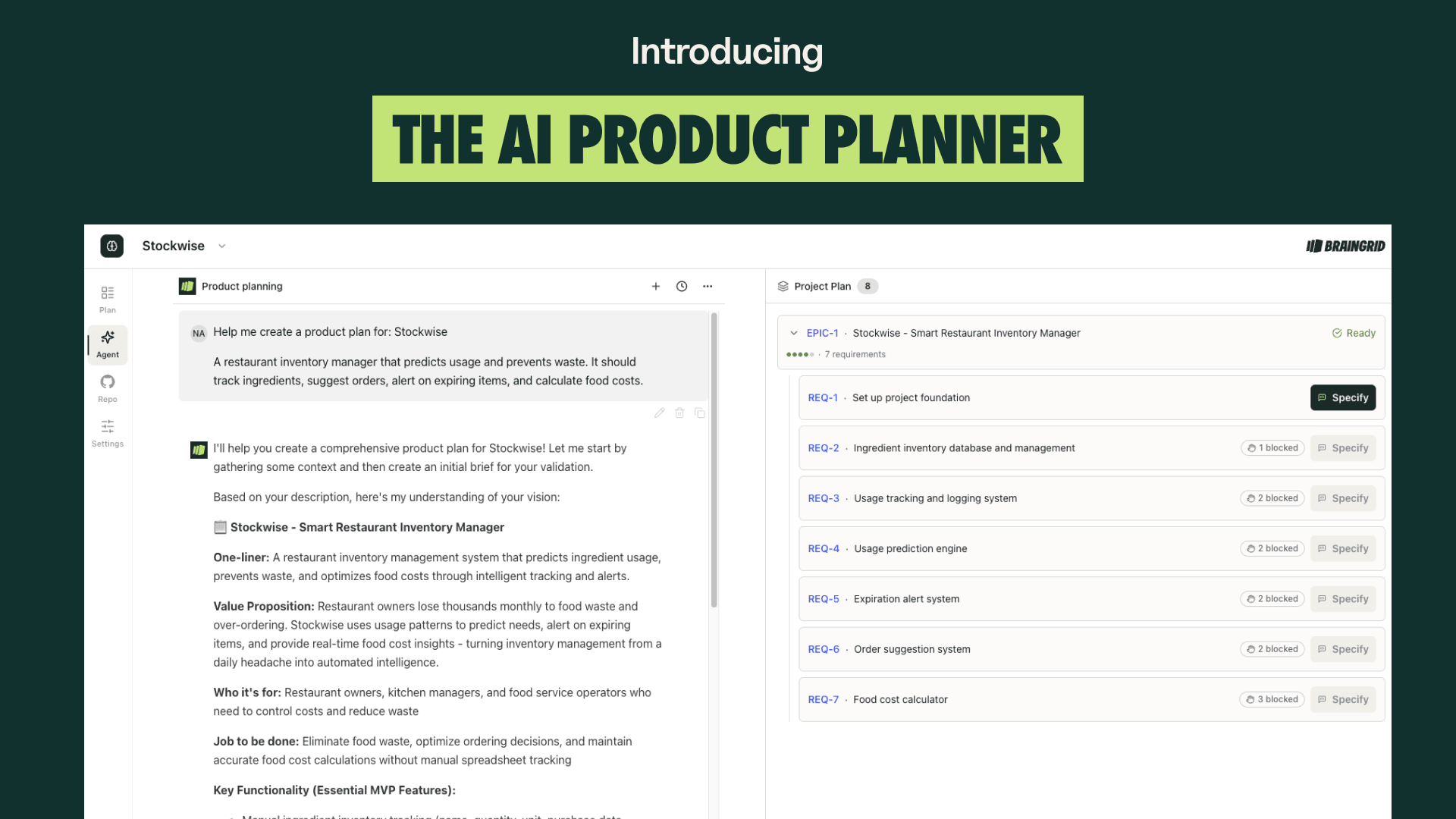
Four capabilities, one goal: help you ship with clarity.
-
Unified Plan view
Epics and requirements organized in a single structured hierarchy. -
AI-guided specification
Planning agents ask smart clarifying questions to turn vague ideas into buildable specs. -
Readiness scoring
A clear signal for what is ready to build and what still needs work. -
Dependency management
Visualize blockers before they slow you down.
#Why We Built It
Builders kept telling us the same thing.
“I know what I want to build, but I don't know how to get it out of my head in a way AI can reliably execute.”
AI coding tools are excellent at implementation. They are not designed to help you think through product strategy, scope, sequencing, or the bigger picture.
That missing step is where most AI-built apps start to break.
We built AI Product Planner to fill that gap. It meets you where you are, whether that is a half-formed idea or a detailed concept, and helps you turn it into a plan that can actually be built.
#How It Works
#1. Create your plan
Start with a project. This could be a small feature, a single change, or an entire product.
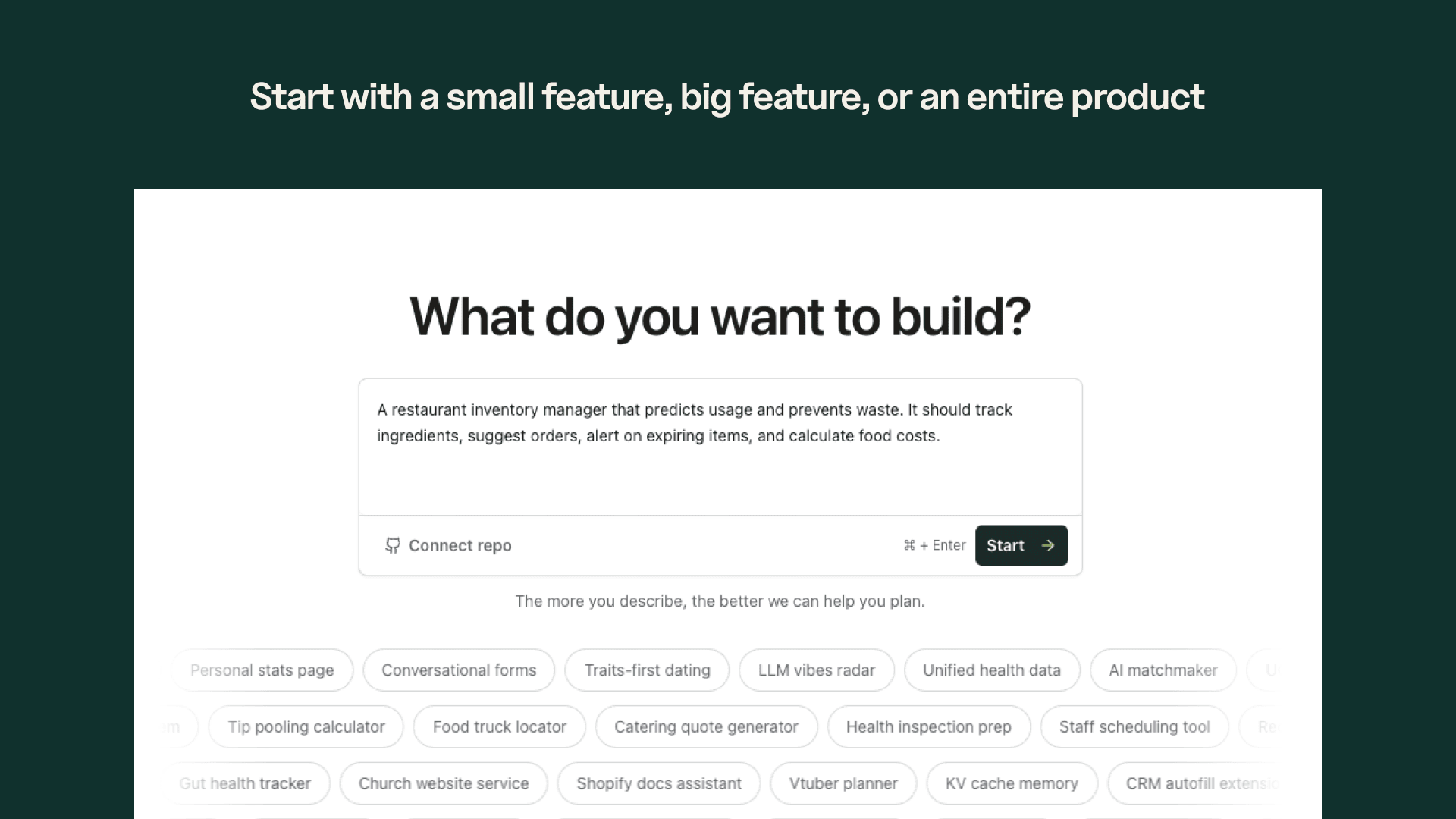
BrainGrid organizes your thinking into a clear product plan. Epics give you the big picture. Requirements keep things concrete and actionable.
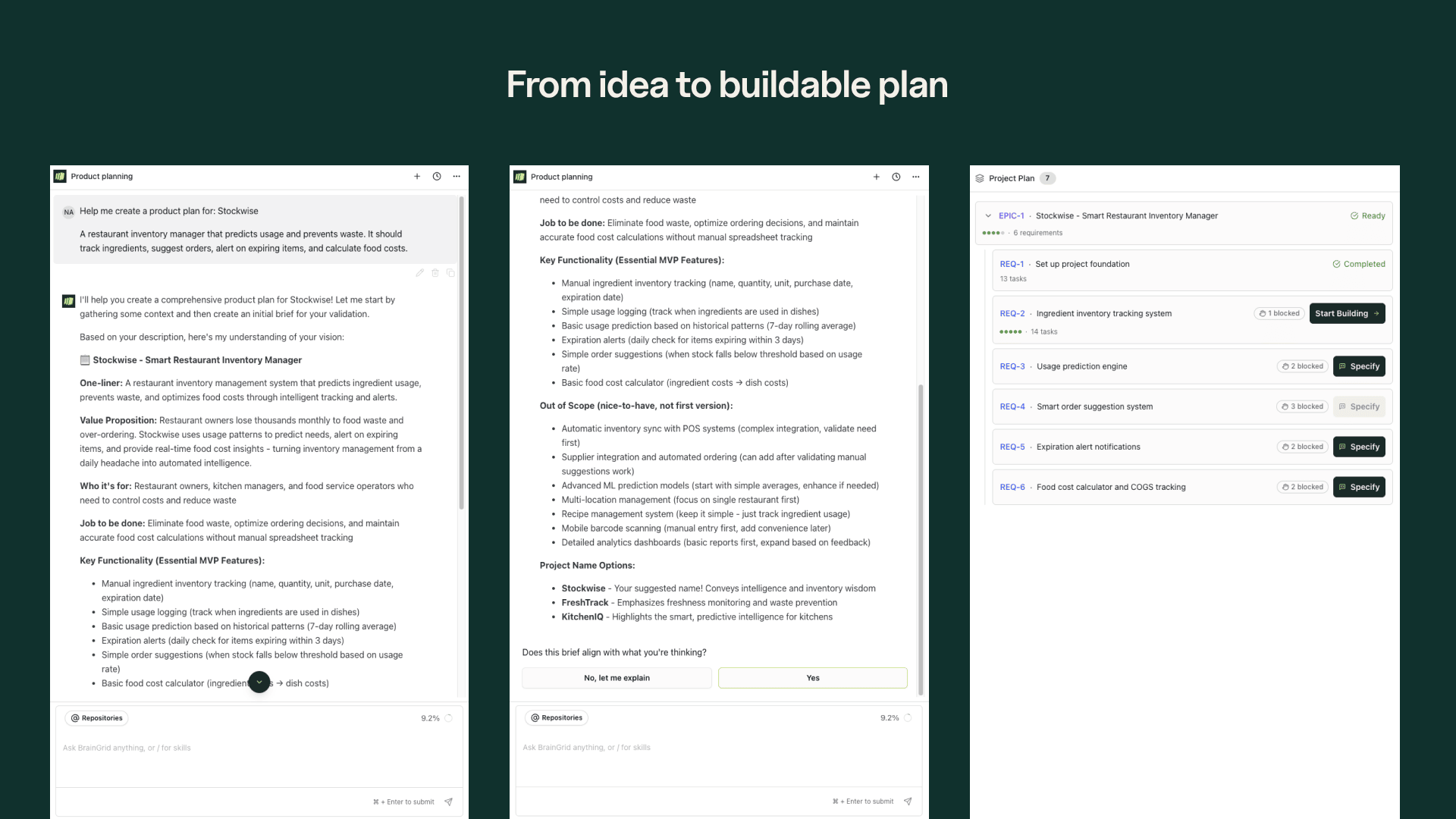
#2. Specify with AI guidance and clarifying questions
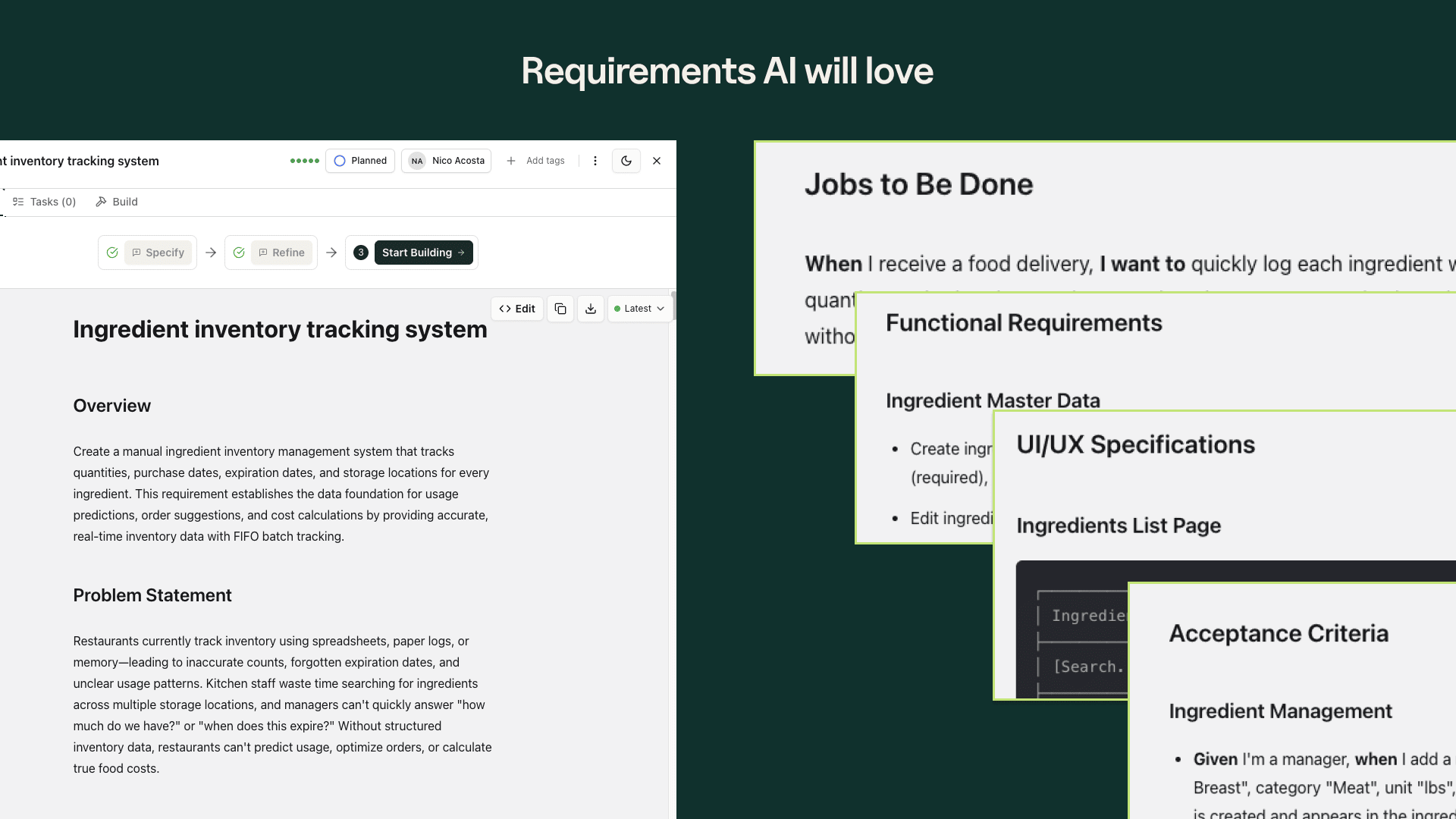
Select a requirement to specify. The planning agent asks the kinds of questions an experienced product manager and tech lead would ask.
What is the user flow?
What are the edge cases?
What constraints matter?
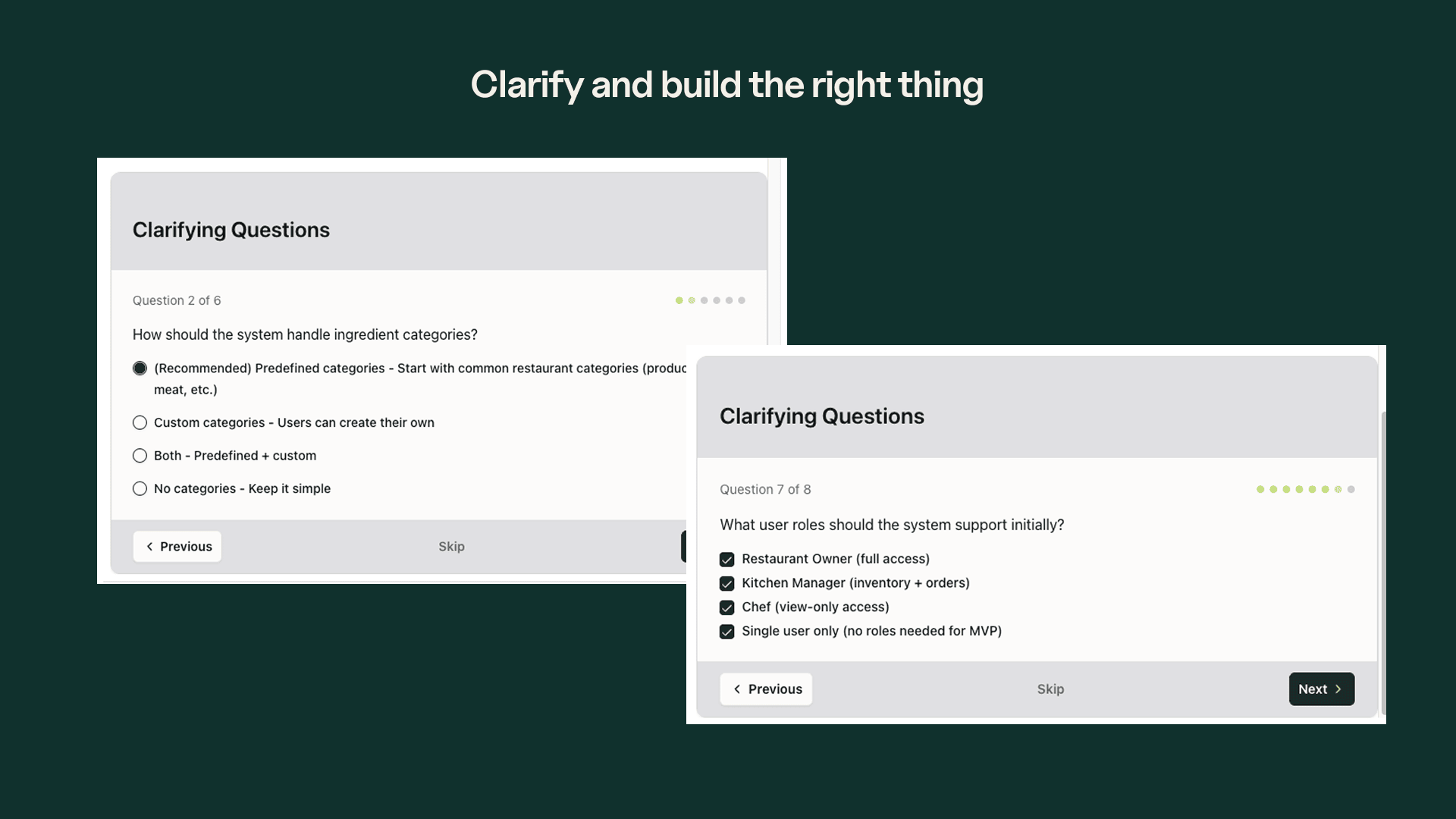
You work one requirement at a time, without losing sight of the overall plan. Large initiatives become manageable.
The result is a fully specified requirement with the context AI coding tools need to build it correctly.
#3. Check readiness scores
Each requirement receives an AI-evaluated readiness score from 1 to 5.
| Score | Meaning |
|---|---|
| 1–2 | Needs more definition |
| 3 | Good for discovery, not ready to build yet |
| 4–5 | Ready to build |
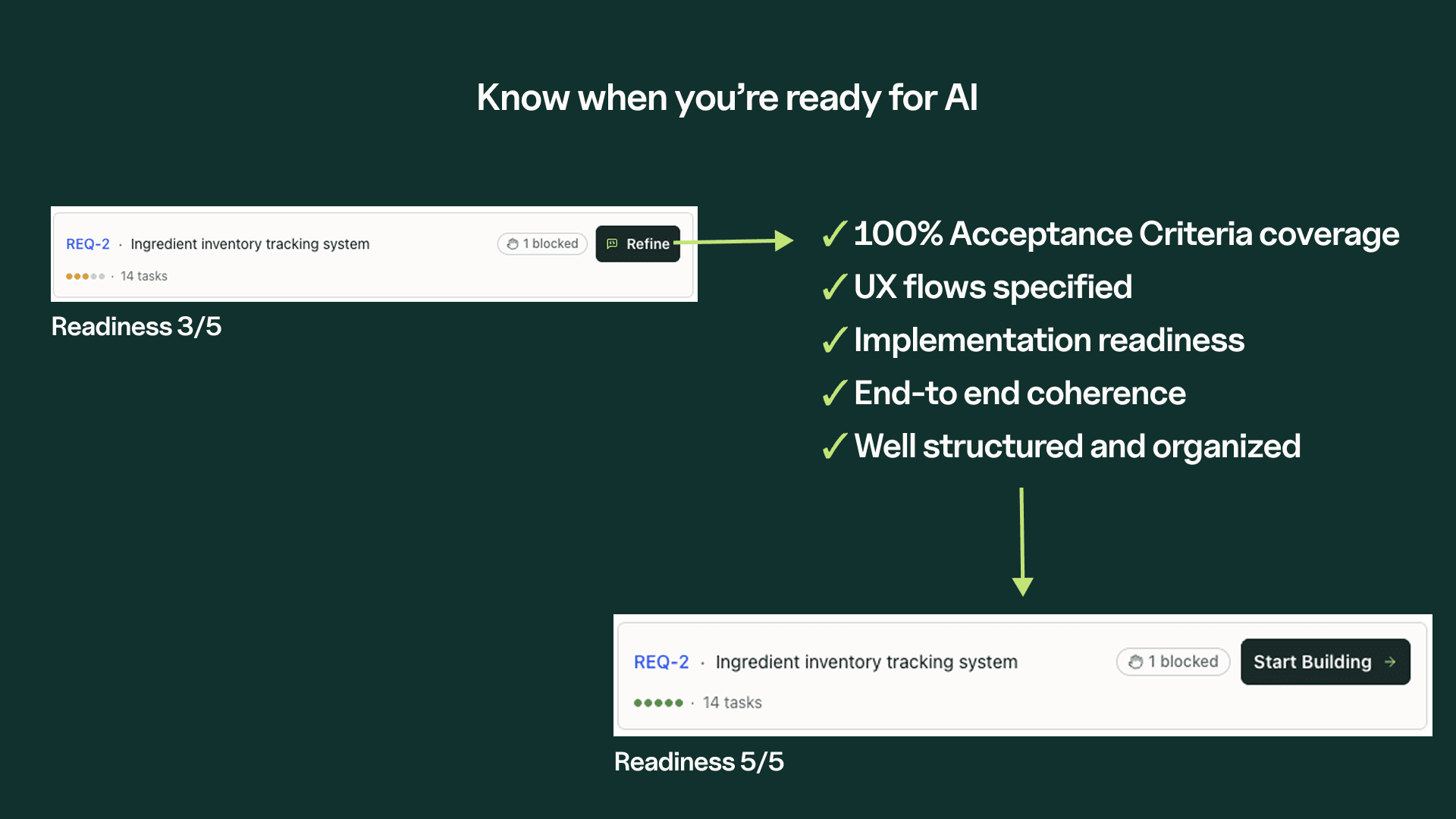
Low scores tell you where to refine your thinking. High scores mean you can confidently hand work off to your coding agent.
#4. Manage dependencies
Most features depend on other work being completed first. AI Product Planner makes those relationships explicit.
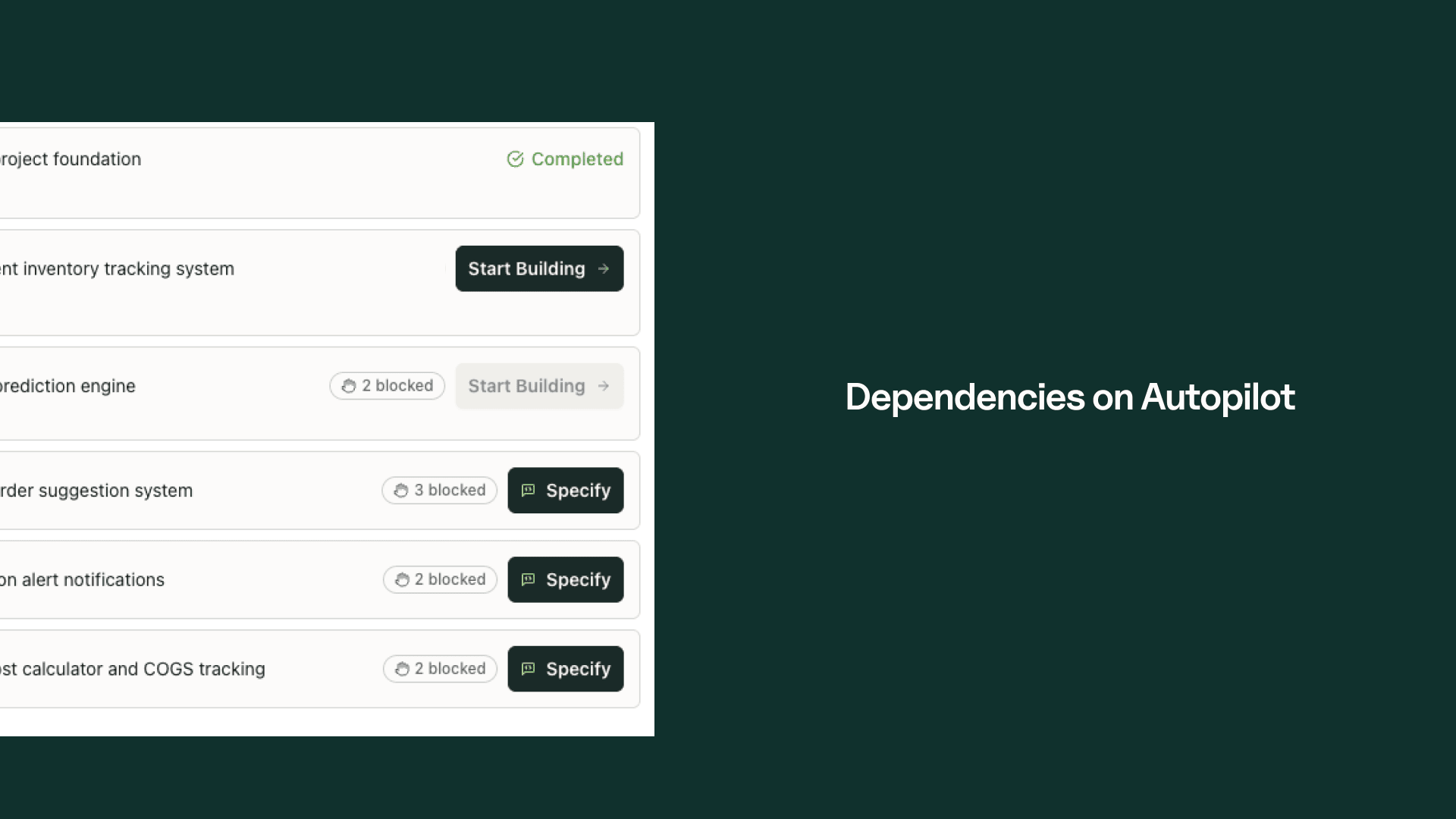
You can see what is blocked and what is blocking it before development starts.
#5. Build with your favorite coding agent
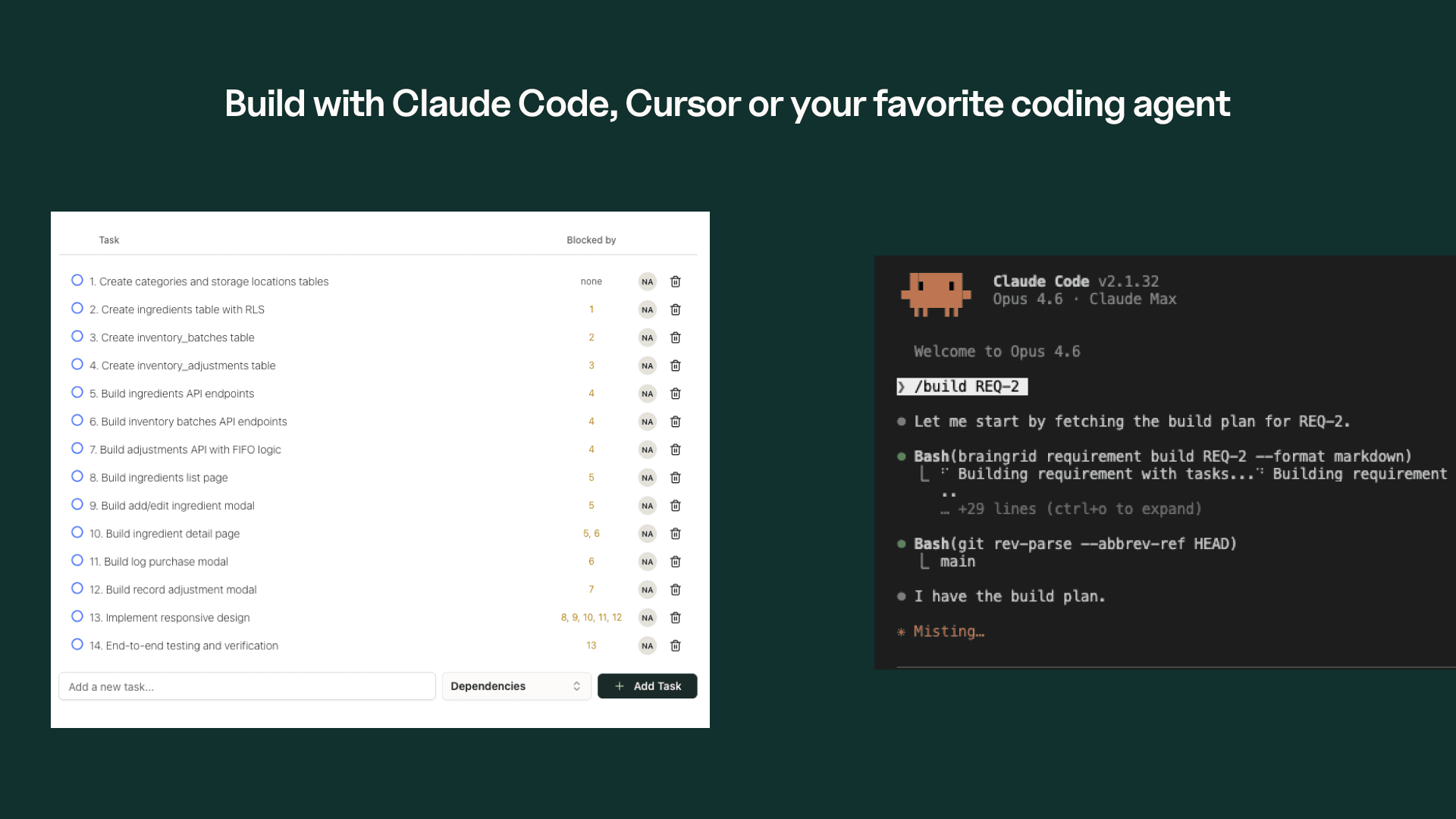
Send structured tasks to Claude Code, Cursor, Codex, Replit, or Lovable via MCP, CLI, or simple copy-paste. Each task includes all the context your AI coding agent needs to build it correctly.
BrainGrid stays focused on planning. Your coding agent stays focused on execution.
#From idea to execution
A typical workflow looks like this:
- Bring your ideas into a plan
- Organize them into epics
- Specify the most important requirements
- Check readiness scores
- Set dependencies
- Ship by handing high-readiness requirements to your coding agent via CLI, MCP, or copy-paste
Your Plan view becomes the source of truth. You always know what you are building, why it matters, and what comes next.
#Get Started
AI Product Planner is available now for all BrainGrid builders.
Create a project, add your first epic, and let the planning agent help you turn your next idea into something buildable.
Keep Reading


Ready to build without the back-and-forth?
Turn messy thoughts into engineering-grade prompts that coding agents can nail the first time.
Re-love coding with AI